
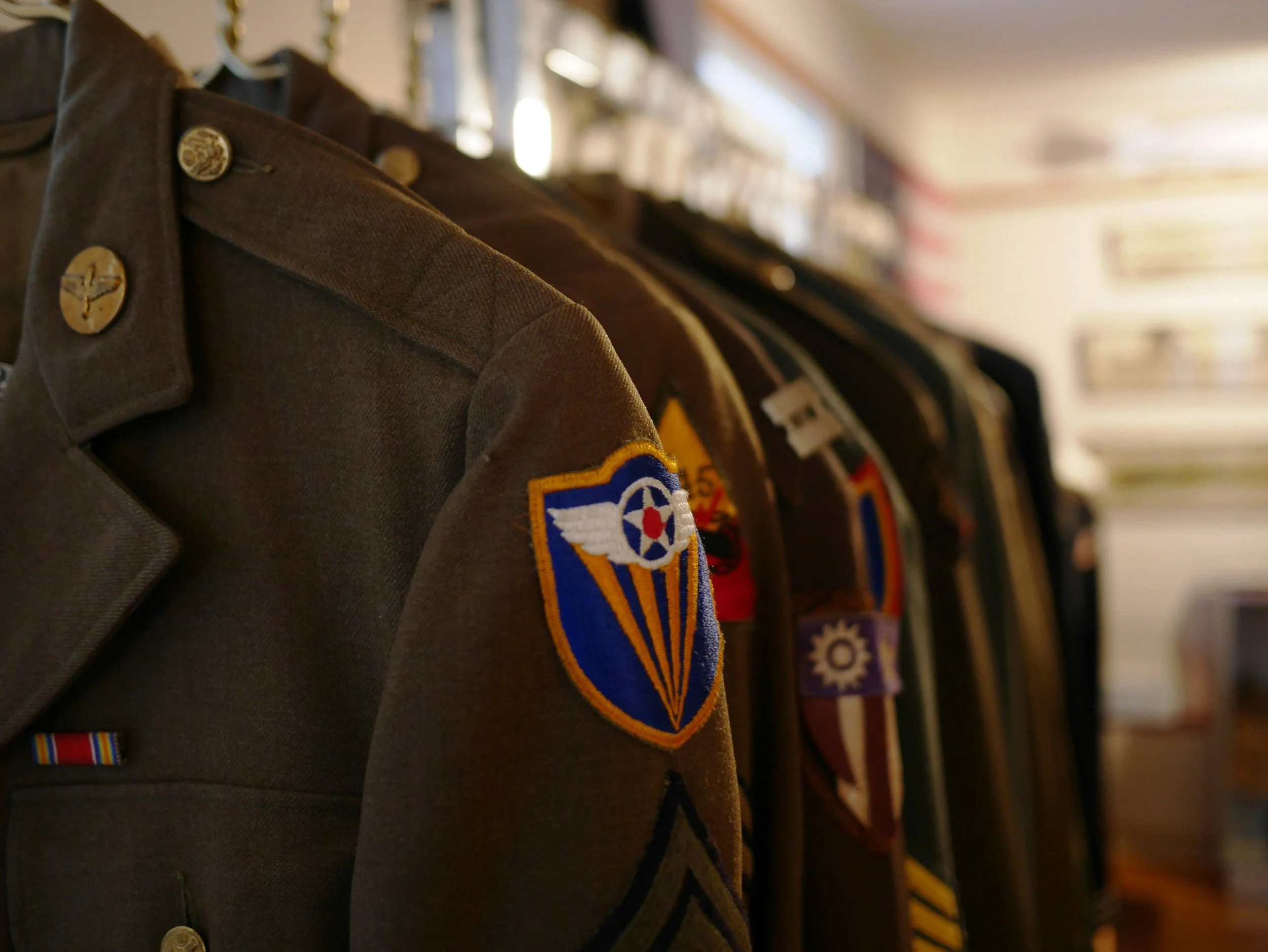
Today, on Remembrance Day, we pause to honour the men and women who served. As a design academy, we are also reminded of something quieter: many of the garments hanging in our closets began as uniforms.
Long before they appeared on runways, pieces like the trench coat and the peacoat were designed for a single purpose. They had to protect, endure and perform in some of the harshest conditions imaginable. That focus on function is exactly why they have lasted for more than a century.
The Trench Coat
The trench coat takes its name from the trenches of the First World War, where officers needed a coat that could stand up to wind, rain and mud. Heavy greatcoats became waterlogged, so a lighter, weatherproof alternative was developed.
Almost every detail had a job. The storm flap at the shoulder kept rain from running inside the coat. The belted waist allowed a closer fit for warmth, and the shoulder straps held gear and showed rank. The double-breasted front added an extra layer of protection across the chest.
Today, those same details are what make a trench coat instantly recognizable. They remain in the design not out of necessity, but because they were built so well.

The Peacoat
The peacoat was made for sailors working on open decks in cold, wet weather. It was cut from heavy, tightly woven wool that resisted wind and held warmth even when damp.
Its double-breasted front could be buttoned on either side, so sailors could close it against the wind from whichever direction it blew. The wide lapels could be turned up and fastened to protect the neck, and the shorter length kept the coat out of the way while climbing and working.
The peacoat is a lesson in fabric choice. Its warmth and structure come as much from the wool itself as from the cut, which is why material selection matters so much in tailored outerwear.
The Bomber Jacket
Early military pilots flew in open cockpits at high altitudes, where temperatures dropped well below freezing. They needed a jacket that was warm but short enough not to bunch up while seated in a tight space.
The result was the flight jacket, later known as the bomber. Its fitted waistband and cuffs sealed out cold air, and its cropped length allowed easy movement in the cockpit. Early versions were made from leather lined with fleece, and later designs moved to lighter nylon.
The bomber shows how proportion is driven by purpose. Its signature shape came directly from the way it needed to be worn.
Cargo Pants and the Cardigan
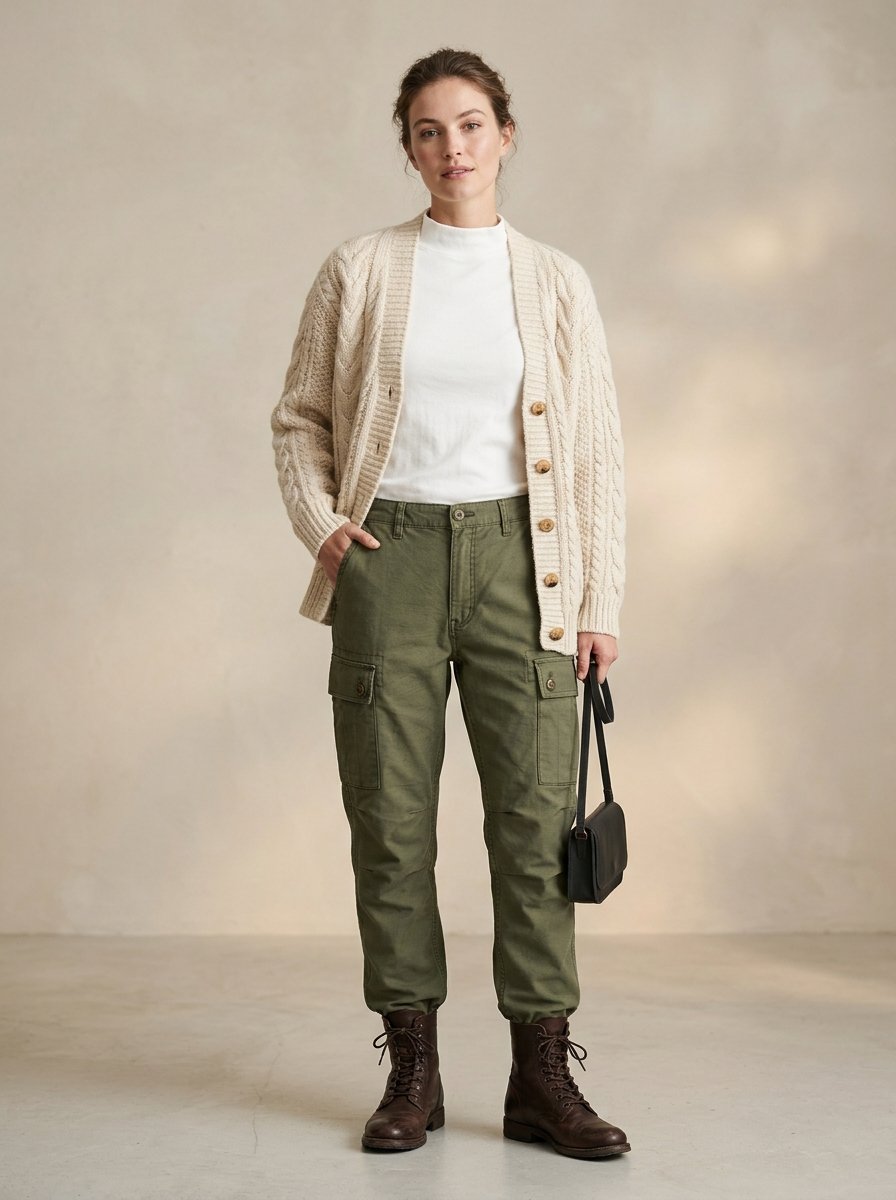
Cargo pants were introduced as part of military field uniforms. Their large patch pockets on the thigh let soldiers carry maps, supplies and equipment while keeping their hands free. Today, the same pockets define one of the most widely worn trouser styles in the world.
The cardigan has an equally interesting story. It is named after the 7th Earl of Cardigan, a British officer during the Crimean War. The knitted, button-front layer was worn for warmth under uniforms and could be put on or taken off without disturbing the rest of the outfit.
Both pieces prove that a single practical idea, a pocket or an opening, can shape a garment for generations.
Why These Pieces Last
What these garments share is not just their history. It is their construction. Each one was engineered for a specific job, and that engineering happens long before a single stitch is sewn.
It starts with the pattern. A structured shoulder, a lapel that rolls cleanly, a collar that holds its shape: all of these are decided at the drafting table. Then comes the tailoring. Canvas interlining gives a coat its shape and body. Careful fitting makes sure it moves with the wearer. Hand sewing and pressing give it a finish that lasts.
Next time you put on a classic coat, take a closer look at how the collar, shoulder and closure are built. That is where great design begins, and it is a skill that can be learned.
Learn the Craft Behind the Classics
At The Cut Design Academy, students learn these skills hands-on, in a professional workshop setting with experienced industry instructors.

Pattern Making & Assembling Technique Certificate
Every garment begins with a pattern. This 14-week, 280-hour program builds industry-level skills in pattern drafting, fit and garment construction. It is designed as the starting point for students with no previous experience, taking you from first draft to finished garment.
Explore the Pattern Making Certificate
Women's & Men's Tailoring Certificate
For those drawn to structured garments like the coats and jackets above, this 8-week, 160-hour program teaches the techniques behind them. Students draft and construct tailored trousers, vests and jackets, focusing their project work on either women's or men's tailoring.
The program covers:
Pattern drafting for tailored garments
Professional fitting and pattern adjustments
Hand-sewing techniques, including canvas work and buttonholes
Working with wool, lining, horsehair interlining and coat interfacing
Pressing and finishing for a polished, professional result
Explore the Tailoring Certificate
Honouring the Past, Building the Future
The garments that began in uniform have outlasted the eras that created them, because they were built with purpose and precision. As we remember those who served, we can also appreciate the craftsmanship that continues to shape what we wear.
If you are ready to learn the skills behind these timeless pieces, our admissions team would love to hear from you at admissions@thecutdesignacademy.com or (236) 477-4598.